


February 26, 2026
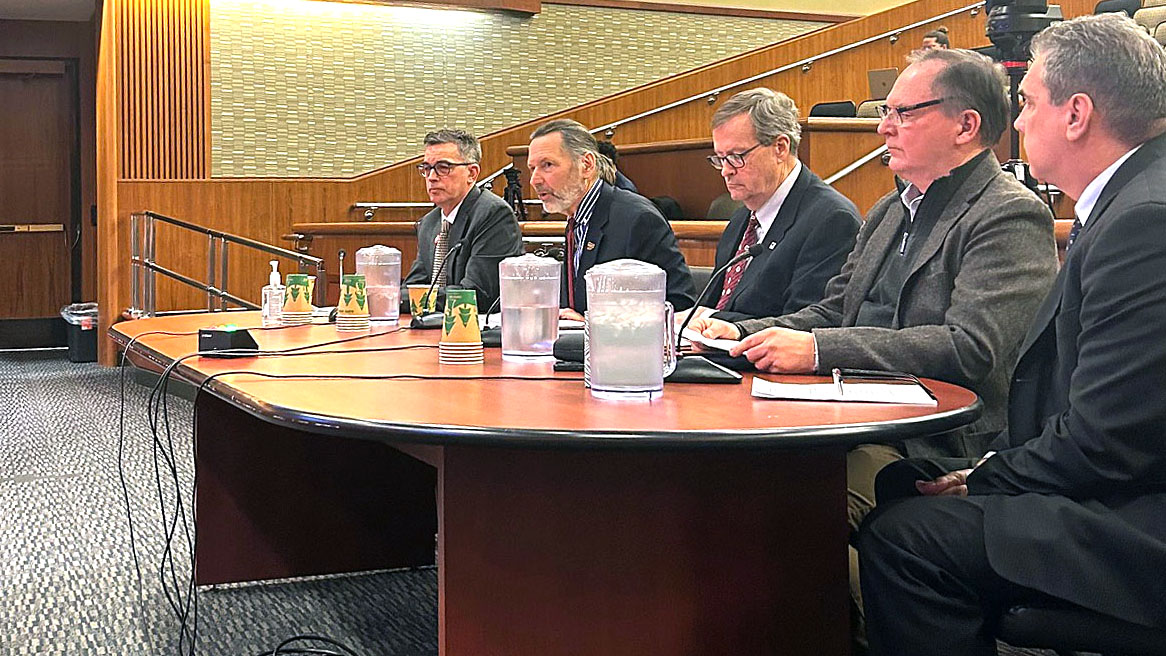
State lawmakers heard two very different versions of SUNY’s status and future Feb. 24 as they gathered testimony that could help determine higher education funding in the next state budget.
UUP President Fred Kowal spoke respectfully but bluntly to lawmakers, disputing what he called a “rosy” depiction of SUNY that Chancellor John King Jr. offered earlier in the hearing on the state’s 2026-2027 budget.
As Kowal noted, several SUNY campuses still face multi-million-dollar budget deficits, retrenchments and program cuts have just occurred at Buffalo State University and SUNY is backing an austerity plan at the College of Environmental Science and Forestry that UUP strongly opposes because the union believes it will detract from the nationally renowned college’s standing.
"The money our campuses need—to close deficits that stem back to the Great Recession, to fix aging infrastructure and to fully staff academic and professional staff positions—is a tiny fraction of the state budget,” said Kowal. “We need to continue the progress we have made over the last three years to ensure that campuses have the resources to provide the highest quality of academic programs and services for our students."
Kowal told lawmakers that while he appreciates the support that Gov. Kathy Hochul and the Legislature have shown for SUNY, the Executive Budget proposal of a net increase of $49.3 million in operating aid for the SUNY state-operated campuses is “not nearly enough.”
“When you consider the deep cuts of the Great Recession, the austerity budget of the Cuomo administration and the recent unprecedented attacks on higher education by the federal government, it is critical that New York state provide significant increased resources to SUNY campuses,” Kowal said.
UUP seeks a total increase of $141.8 million in state operating aid over last year’s enacted budget. The union wants $41.8 million of that amount go directly to the four campuses that still face the greatest financial stress. Those campuses are the College of Environmental Science and Forestry, with an $8.3 million deficit; Buffalo State University, with a $16 million deficit; Fredonia, with an $11 million deficit; and Potsdam, with a $6.5 million deficit.
Kowal reiterated UUP’s longstanding request that the Legislature directly allocate funding to SUNY’s most cash-strapped campuses, instead of allocating operating funds as a lump sum to SUNY, to be distributed as the SUNY Trustees decide.
“We urge you to make these direct appropriations to ensure these campuses have the resources they need,” Kowal testified.
Lawmakers also spent considerable time questioning Kowal about the financial woes at SUNY ESF.
“It is extremely disturbing,” Kowal testified in response to questions about the austerity plan there that offers early retirements as a way of cutting costs “This morning, we heard the glowing report that everything is good. However, dozens of faculty and staff have taken the (ESF) separation agreement. Not all of those positions are going to be filled.”
Scott Gray, a North Country Republican member of the Assembly whose 116th District includes Canton, Potsdam and Watertown, asked Kowal if he could see ESF being granted the status of a University Center in the SUNY system. Kowal enthusiastically said that such a move would help ESF immeasurably, and that it would help the college accommodate more of the students it now turns away for lack of room.
Democratic Assemblymember Anna Kelles of the 125th District—which includes Cortland—has been a strong advocate for ESF, and she also asked Kowal several questions about the college.
Kelles, who holds dual degrees in biology and environmental studies from Binghamton University, commented that because the ESF curriculum is grounded in basic science, “…it has to have smaller classes.”
A “heartbreaking” struggle
Kelles also noted that the ESF roster of nationally known environmentalists includes the acclaimed author Robin Kimmerer, director emeritus of the ESF Center for Native Peoples and the Environment. Kelles described the ESF travails as “heartbreaking.”
Kimmerer will be a panelist in a March 3 virtual forum about the future of ESF, hosted by UUP. Click HERE for more information and to register.
The annual budget hearing by the Assembly Ways and Means Committee and the Senate Finance Committee had added significance this time around, given the federal administration’s relentless and unprecedented attacks on the country’s universities.
UUP members will be advocating throughout state budget negotiations for better funding for SUNY and for the union’s legislative agenda. Go HERE to read more about UUP’s legislative priorities.